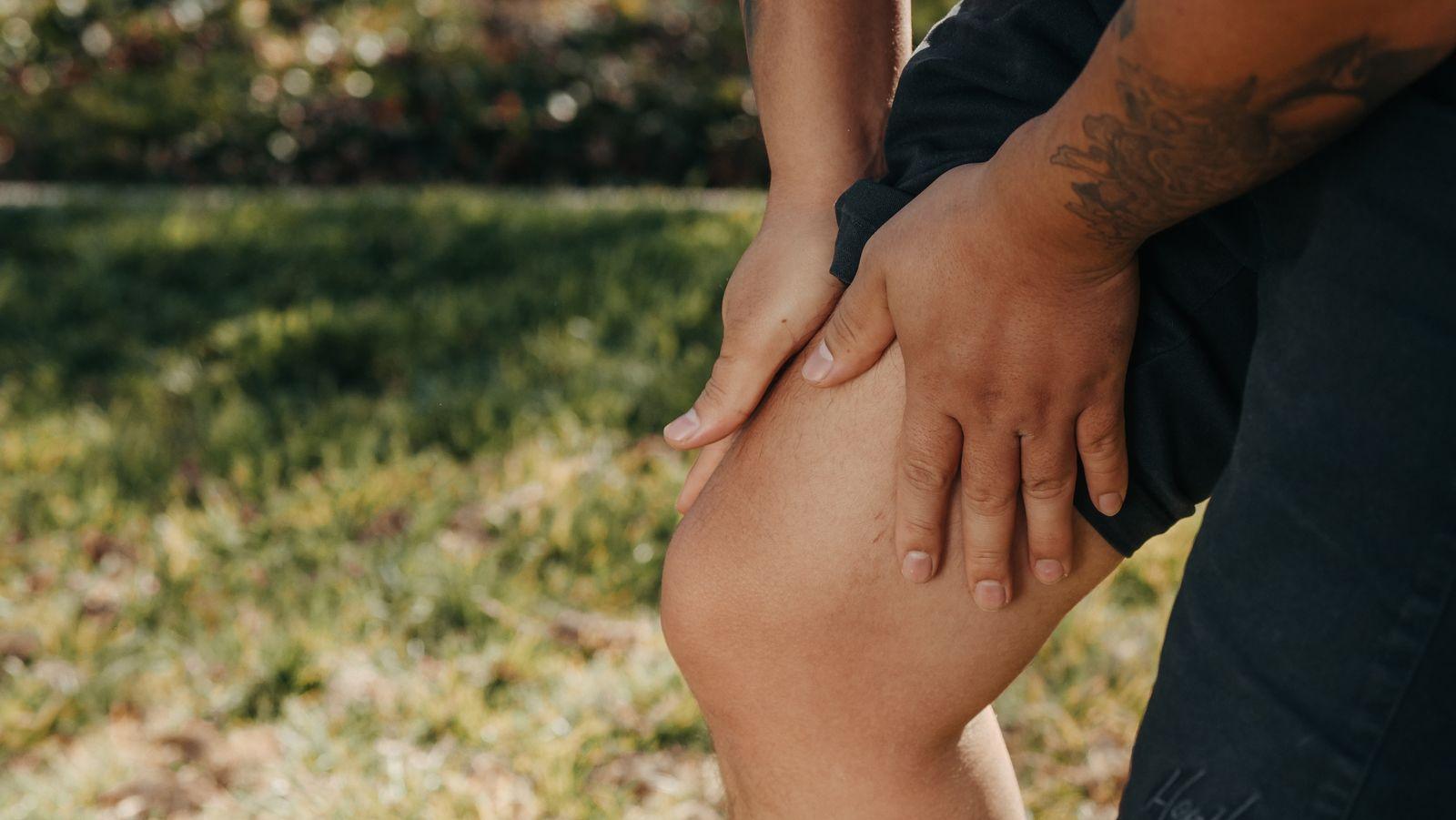
Osteoarthritic knee pain
The most common cause, especially over 50 and more often in women; a history of sport or overuse makes it more likely. The cartilage between the thigh bone and shin bone, or behind the kneecap, wears down, and pressure on the pain-sensitive lining of the bone causes pain that is worse on stairs, squatting and running or walking. You may also get stiffness after inactivity, with clicking or grinding.
Nothing can reverse the wear to the cartilage, but treatment can help reduce pain and increase mobility, and it is generally very effective.
Post-traumatic knee pain
After an injury a knee may recover fully with rest. If pain has worsened or persists, it is worth having it assessed. The first job is to check for ruptured or damaged ligaments, if your knee gives way or feels unstable, further investigation is needed.
If the knee is stable and there is no severe damage, the pain may come from prolonged inflammation, or from changes in the way you have walked since the injury. Manual therapy can reduce scar tissue and improve knee function, and exercises and advice help prevent further injury.
Idiopathic knee pain (unknown cause)
A history and full examination are vital here. Treatment may include soft tissue work, rehabilitative exercises or referral for orthotics.
- A sudden increase or change in training, or overuse
- Knee alignment or foot problems
- Hypermobility
Common questions
Can you treat arthritic knees?
You cannot reverse the cartilage wear, but manipulation, mobilisation and soft tissue work can reduce pain and improve movement. Once the initial improvement has been made, treatment can be as infrequent as every 3–4 months.